What happens once you’ve clicked your way to five bones and still don’t have enough for your first real unit? That’s the wall every new player hits within the opening minute of Right Click to Necromance, and it’s the moment the game explains its whole design: bones are the only currency that matters, and every skeleton has to be earned one click at a time.
| Genre |
Incremental clicker |
| Currency |
Bones |
| Units |
Digger, Warrior, Wizard |
| Controls |
Click to gather, click to spend |
The Bone Economy Behind Right Click to Necromance
Everything runs through bones. You click the pile in front of you, bones trickle in, and once you’ve stacked up enough — the game nudges you toward that first threshold of five — you can spend them on your first hire. There’s no secondary currency hiding behind a menu, no gems or premium track competing for attention, which is part of why the loop feels readable within the first few minutes.
The early grind is deliberately slow. Clicking for five bones takes long enough that players start hunting for a faster route before they’ve hired anyone, and that impatience pushes them toward the Digger.
Beginners consistently make the same mistake: they keep clicking manually long after a Digger would have paid for itself. Manual clicking never stops being useful, but it stops being efficient once passive income exists to replace it.
Digger, Warrior, and Wizard: Building the Skeletal Army
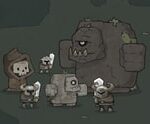
The three purchasable units each solve a different problem. The Digger automates bone collection, turning manual clicking into background income — almost always the correct first purchase, since every bone it generates funds the units after it. The Warrior serves a different purpose: rather than generating currency, it adds raw numbers to whatever skeletal force you’re assembling.
The Wizard sits apart from both. Community discussion treats it as the unit worth saving for, since it changes the shape of a run rather than adding another body to the pile. Players who rush a Wizard purchase too early end up bone-starved for several minutes.
Once all three types are in play, the run stops being about clicking and starts being about sequencing — whether the next batch of bones goes toward another Digger, more Warriors, or a second Wizard.
Why the Five-Bone Threshold Sticks With Players
Ask around in clicker-game communities and the phrase that comes up most is some version of “click below until you get five bones” — shorthand for the exact moment the tutorial hands control back to you and lets the economy speak for itself. That number sticks because it’s small enough to hit almost immediately, but large enough to make the first Digger purchase feel earned.
By the second or third Digger, the bone counter moves fast enough that the five-bone barrier feels almost quaint. It’s a small hurdle that only matters once, right at the start.
Efficiency-minded players treat that opening threshold as a benchmark to beat on a second attempt. Others barely notice it, more interested in watching the skeletal army grow than optimizing the first few seconds.
The Grind Right Click to Necromance Players Argue About
The grind here is real, and that’s genuinely divisive. Idle-game veterans appreciate how transparent the bone economy stays — no hidden multiplier working against you, no surprise cost spike slowing progress artificially. Newer players are more likely to bounce off the early minutes before Digger income makes the pace feel worthwhile.
Players who enjoy short sessions get a clean stopping point every time they hit a new unit threshold, while players chasing a bigger army keep the tab open in the background, checking in as bones accumulate. Both approaches work.
A common complaint is that the screen barely changes shape between early and late game — bones and skeletons stack up, but the visual payoff doesn’t scale the way some players expect.
- What’s the fastest way to afford a Warrior? Buy a Digger first. Manual clicking alone takes noticeably longer to reach a Warrior’s cost than letting passive bone income stack up in the background.
- Is the Wizard worth saving bones for early on? Most experienced players say yes, but not immediately — rushing a Wizard before steady Digger income leaves you bone-starved for several minutes.
- Does Right Click to Necromance have an end goal or run forever? The loop is built around continuously growing your skeletal army rather than a fixed finish line, so sessions end when the player decides they’ve built enough.
Right Click to Necromance never complicates its own premise: bones in, skeletons out. But the sequencing between Digger, Warrior, and Wizard is where the real decisions live, and that’s what keeps players clicking back into the pile long after the first five bones stopped being a challenge.