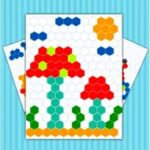
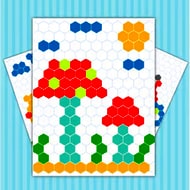
A finished picture in Mosaic Puzzle Art is never painted with a brush — it is built one small colored tile at a time, and until the last tile clicks into place, the reference image beside your grid is the only proof you’re getting it right. That detail sets the game apart from a normal coloring app: you’re not filling a shape freehand, you’re matching a grid square by square until a picture that already exists reveals itself.
| Genre |
Puzzle, color-by-number art |
| Core mechanic |
Select a color, tap the matching grid tile |
| Reference |
Full preview image shown beside the grid |
| Platforms |
Browser, mobile |
| Progression |
Multiple images of increasing tile density |
Matching Tiles Instead of Painting Freehand in Mosaic Puzzle Art
The core loop sounds almost too simple at first: pick a color from the palette, then tap the grid square that’s supposed to hold it. There’s no drawing skill involved and no penalty for an unsteady hand, which is why beginners underestimate it — the challenge isn’t dexterity, it’s tracking which color goes where once a grid passes the first few dozen tiles.
What trips players up early isn’t the tapping but losing their place in a large palette. A grid with a dozen similar blues and greens forces constant double-checking against the reference image, a habit every regular player of the game picks up fast. By the time a puzzle is two-thirds full, the emerging picture starts helping you guess remaining tiles faster than the palette alone.
Casual players stick to smaller, low-tile-count images for a short break, while completionist players chase every picture in a set to watch the gallery fill in. Either way, the game rewards patience over speed — no timer punishes a pause to figure out where a stray gold tile belongs.
Why Mosaic Puzzle Art Gets Harder Without Getting Faster
Mosaic Puzzle Art doesn’t ramp up difficulty with a clock or fewer colors. It does it by increasing tile density and shrinking the visual gap between similar shades, so a later image with a hundred-plus tiles and six near-identical browns plays nothing like an early one built from large blocks of distinct color.
Players who’ve worked through several sets talk about specific images the way puzzle fans talk about a hard crossword clue — a picture everyone remembers finishing because the shading demanded constant reference-checking near the end. That’s the one thing you notice only from playing repeatedly: the last handful of tiles in a dense grid always take longer, since few blank squares are left to narrow the guesswork.
Some players find that pacing satisfying, treating a finished mosaic as a small, earned reward. Others find the densest grids tedious rather than relaxing — meditative to some, repetitive to others.
Mosaic Puzzle Art earns its replay value from that tension between simplicity and density, and once a reference image finally matches the completed grid tile for tile, it’s hard not to start the next one to see what picture is hiding under the next blank canvas.